 Nora with Altanora
How to Boost Workforce Productivity by 40%: A Strategic Guide to Digital Employee Experience
 Team Altanora : Aug 12, 2025
Maximize productivity and employee satisfaction with a robust Digital Employee Experience (DEX) strategy.
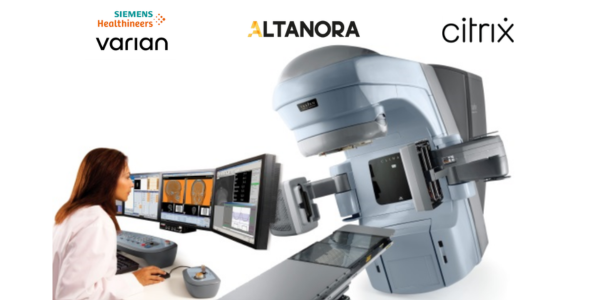
Why Citrix Is the Best Platform to Host Siemens Varian ARIA — from Small Clinics to Large Health Systems
Organizations running Siemens Healthineers Varian ARIA or ARIA Core often ask us the same question: “We only have 10 or 12 ARIA users. Do we really need Citrix?”
It’s a fair question, especially for smaller oncology clinics and local healthcare providers. But it’s also a question that comes up in much larger organizations that already rely on Citrix for hundreds or even thousands of users.
Based on our experience supporting Siemens Varian ARIA environments across the United States and Canada, the answer is consistent: Citrix is the best platform to host Siemens Varian ARIA — not only for large health systems, but also for small environments with fewer than 15 users.
The same architectural principles that make Citrix the standard for large ARIA deployments also apply to smaller ones.
Citrix is widely used to host large Siemens Varian ARIA environments, including:
In these organizations, Citrix is not chosen for convenience. It is chosen because it delivers predictable behavior, strong isolation, and longterm stability at scale.
What matters is that ARIA behaves the same way on Citrix whether there are 10, 50 or 500 users. The architecture does not change — only the scale does. This is why the reasoning behind using Citrix for small ARIA environments remains valid, and in many cases even more important.
ARIA supports oncology workflows, treatment coordination, and access to highly sensitive patient data. Performance issues, session instability, or inconsistent behavior are not just IT problems — they directly affect clinical operations.
Citrix, managed by Altanora, has long been used in healthcare precisely because it provides:
These characteristics align well with the operational expectations of Siemens Varian ARIA environments.
A common misconception is that fewer users mean lower risk. In practice, small ARIA environments are often more sensitive to disruptions.
Smaller clinics typically have:
In a 10 or 15 user ARIA deployment, one unstable session can disrupt an entire care team. Citrix reduces this risk by providing strong session isolation and controlled application behavior, even during long clinical sessions or under imperfect network conditions.
One of the oftenoverlooked benefits of Citrix is how much it simplifies support and longterm operations when deployed correctly.
Citrix enables:
For support teams, this means:
This is a key reason Citrix remains a trusted platform in healthcare environments where uptime and reliability are critical.
Generic VDI, basic RDP, or cloud desktops are often designed for office productivity workloads. They may appear easier to deploy, but they typically lack the controls and predictability required for clinical systems like ARIA.
Citrix provides capabilities that are particularly relevant for ARIA:
For both small clinics and large health systems, these characteristics translate into fewer disruptions and more consistent clinical workflows.
When evaluating how to host Siemens Healthineers Varian ARIA, organizations often compare Citrix with Omnissa Horizon (formerly VMware Horizon), Azure Virtual Desktop (AVD), Windows 365, or even traditional PCs. While each option has valid use cases, they are not equivalent for clinical oncology workloads.
Citrix is better suited for ARIA because it was designed for applicationcentric, longrunning, stateful workloads that must remain stable over time.
l workloads that must remain stable over time.
For Siemens Varian ARIA, the goal is not just access — it is predictable, supportable clinical operations. Citrix is designed for exactly that.
Citrix is powerful but operating it correctly requires expertise. This is where Altanora and its partner ecosystem play a critical role.
Altanora does not operate in isolation. We work closely with a network of trusted partners who support local health systems, clinics, and healthcare providers across the US and Canada.
Together, we deliver Citrix as a fully managed, pay-per-user, hosted service, designed specifically for regulated healthcare workloads such as Siemens Varian ARIA.
Altanora’s Secure DaaS+ goes beyond traditional VDI or simple application publishing. Built on Citrix and integrated into our UHMC (Unified Hybrid Managed Cloud) framework, Secure DaaS+ includes:
These capabilities are delivered as a unified, managed service, reducing complexity while increasing security and operational consistency.
Altanora Secure DaaS+ is not limited to a single hosting model. The platform is designed to adapt to the operational, regulatory, and clinical realities of healthcare organizations.
Secure DaaS+ can be:
Regardless of the deployment model, the same Citrixbased architecture, security controls, and operational practices apply. This ensures consistency, portability, and longterm stability as organizations evolve.
Citrix is undeniably enterprise technology. It is used by large health systems, supports thousands of users, and powers missioncritical clinical platforms like Siemens Varian ARIA.
What Altanora changes is how that enterprise technology is consumed.
Through Secure DaaS+ and a partnerled delivery model, Altanora removes architectural and operational complexity while preserving the robustness of Citrix. Healthcare organizations get enterprisegrade reliability, security, and scalability — without needing to operate enterprisegrade complexity internally.
This makes Citrix agile, accessible, and practical for both small clinics and large health systems.
Citrix is sometimes perceived as expensive. In reality, cost is driven far more by how the platform is operated than by the technology itself. By delivering Citrix through Altanora and our healthcare partner ecosystem:
This approach lowers total cost of ownership without compromising reliability or safety — a critical balance for healthcare organizations.
Whether you are supporting:
The same principles apply: stability, supportability, and security matter more than simplicity on paper. Citrix provides that foundation. Altanora and its partners make it practical, manageable, and costeffective.
Citrix remains the best platform to host Siemens Healthineers Varian ARIA, from small clinics to large, complex health systems. When delivered through Altanora Secure DaaS+, Citrix becomes simpler to operate, easier to support, and more economically sustainable — while preserving the stability and reliability that clinical environments demand.
Book a Discovery Call
If you are planning, modernizing, or reassessing how Siemens Healthineers Varian ARIA or any other oncology platform is hosted in your organization, the first step is a short discovery conversation.
Altanora and its partners will:
A discovery call is the recommended first step to evaluate the right ARIA hosting model and explore the right path forward.
Q: What is the best platform to host Siemens Healthineers Varian ARIA?
A: Citrix is the best platform to host Siemens Healthineers Varian ARIA. It is widely used in healthcare to host both small ARIA environments and large ARIA deployments with 50+ clinical users in health systems running thousands of Citrix users. Citrix provides the stability, session reliability, and application control required for missioncritical oncology workflows.
Q: Is Citrix overkill for small ARIA environments with only 10–15 users?
A: No. Citrix is not overkill for small ARIA environments. Smaller clinics often have less redundancy and lower tolerance for downtime, which makes stability and predictability even more important. The same Citrix architecture used in large health systems applies equally well to small ARIA deployments.
Q: Why is Citrix commonly used for large ARIA environments?
A: Citrix is commonly used for large ARIA environments because it scales reliably, isolates user sessions, and delivers predictable application behavior across many concurrent users. Many health systems run ARIA on Citrix alongside hundreds or thousands of other clinical and administrative users.
Q: Why is Citrix better for ARIA than Omnissa Horizon, AVD, or Windows 365?
A: Citrix is better suited for Siemens Healthineers Varian ARIA because it provides mature application publishing, stronger session isolation, readonly or nonpersistent operating systems, and predictable longterm behavior. These characteristics are particularly important for latencysensitive, longrunning clinical workflows, where generic VDI, cloud desktops, or PCbased models introduce more variability and risk.
Q: Can Altanora Secure DaaS+ be deployed onpremises or outside the public cloud?
A: Yes. Altanora Secure DaaS+ can be hosted and managed onpremises, in a partner’s data center, or on Altanora’s AIdriven XaaS Global Platform. The same Citrixbased architecture, security controls, and operational practices apply across all deployment models.
Q: Is Citrix too complex for smaller healthcare organizations?
A: Citrix is enterprise technology, but Altanora makes it simple to consume. Through Secure DaaS+ and a partnerled delivery model, Altanora removes operational complexity while preserving stability, security, and scalability. This makes Citrix practical for both small clinics and large health systems.
Q: How do we start evaluating the right ARIA hosting model?
A: The recommended first step is a discovery call with Altanora and a local partner. This allows clinical, technical, and security requirements to be reviewed and an appropriate Citrixbased architecture to be proposed.
Q: What technical benefits does Citrix provide for ARIA?
A: Citrix provides application publishing, strong session reliability, readonly or nonpersistent operating systems, and mature support tooling. When implemented correctly, this results in higher stability, faster recovery from issues, reduced configuration drift, and easier longterm support for ARIA environments.
Q: How does Citrix improve supportability and reliability for ARIA?
A: Citrix enables standardized, repeatable environments with fewer variables. Readonly or nonpersistent systems simplify troubleshooting, reduce longterm degradation, and allow faster remediation. This makes ARIA environments more stable and easier to support over time.
Q: Who operates and supports Citrix for ARIA in this model?
A: Altanora works with a network of trusted partners that support local healthcare providers and clinics across the United States and Canada. Together, they deliver Citrix as a fully managed, hosted service tailored for Siemens Varian ARIA.
Q: What is Altanora Secure DaaS+ for ARIA?
A: Altanora Secure DaaS+ is a fully managed Citrixbased service designed for regulated healthcare workloads like Siemens Varian ARIA. It includes Zero Trust Network Access (ZTNA), ransomware protection, endpoint security, continuous monitoring, and secure remote access, all delivered as a single managed service.
Q: Does using Altanora increase or reduce total cost of ownership?
A: Using Altanora reduces total cost of ownership. By delivering Citrix as a managed service through Altanora and its partners, healthcare organizations avoid the cost of specialized staffing, oversized infrastructure, and fragmented security tools, while maintaining enterprisegrade reliability and security.
Q: Is this approach suitable for both clinics and large health systems?
A: Yes. The same Citrixbased architecture and managed service approach applies to small clinics with 10 ARIA users and to large health systems with 50+ ARIA users and thousands of Citrix users overall. The principles of stability, security, and supportability remain the same.
Audience
IT architects, system administrators, EUC/VDI teams, security teams, and support organizations responsible for Siemens Varian ARIA environments in healthcare settings
Siemens Healthineers Varian ARIA (including ARIA Core) is a stateful, latencysensitive clinical application that supports oncology workflows and access to protected health information (PHI). As such, ARIA environments must prioritize:
Citrix has long been used as the reference application delivery platform for ARIA in both small and large healthcare environments because it aligns well with these requirements.
Citrix is commonly deployed to support:
The underlying architecture used to host ARIA on Citrix does not fundamentally change with scale. What changes is capacity sizing, not design principles.
Key principle:
If an architecture is stable and supportable at large scale, it is inherently suitable for smaller deployments where tolerance for disruption is often lower.
Citrix provides mature session management designed for longrunning, interactive applications. This is critical for ARIA, where sessions may remain open for extended clinical workflows.
Benefits include:
Citrix enables application publishing, allowing ARIA to be delivered without requiring a full persistent desktop per user.
This provides:
For ARIA, this model aligns well with clinical usage patterns.
A key operational advantage of Citrix is the ability to deploy:
This results in:
From a support perspective, this dramatically reduces the number of unknown variables during incident response.
Citrix environments, when implemented correctly, offer strong tooling and operational consistency that benefit support teams:
This is particularly important in healthcare environments where support response time directly impacts clinical operations.
It is important to note that Citrix reliability is architectural, not automatic.
Ultimate stability and reliability are achieved when:
When these principles are followed, Citrix delivers extremely high operational stability over long periods, even in complex environments.
ARIA environments must be protected not only at the application level, but across identity, access, endpoint, and network layers.
Altanora Secure DaaS+ integrates Citrix into a broader security architecture that includes:
This approach reduces reliance on flat networks and perimeterbased security, which are common failure points in healthcare environments.
Altanora does not operate ARIA environments in isolation.
We work with a network of trusted partners that support:
This model ensures:
For IT teams, this reduces coordination complexity and operational risk.
From a technical standpoint, total cost of ownership is driven by:
By delivering Citrix as a fully managed service through Altanora Secure DaaS+:
This lowers TCO without compromising architectural integrity or clinical safety.
From a technical and operational perspective:
For IT and support teams, this approach reduces operational risk, simplifies support, and provides a stable foundation for longterm ARIA operations.
Let's figure out the right architecture for your organization — together.
 Team Altanora : Aug 12, 2025
Maximize productivity and employee satisfaction with a robust Digital Employee Experience (DEX) strategy.
 Team Altanora : Mar 27, 2024
Discover how Modern Endpoint Management with Altanora can revolutionize business efficiency, security, and scalability to significantly boost your...
 Team Altanora : Jan 31, 2024
Explore how Modern Endpoint Management reshapes IT strategy with a focus on cloud solutions, cybersecurity, and workforce mobility, enhancing...